
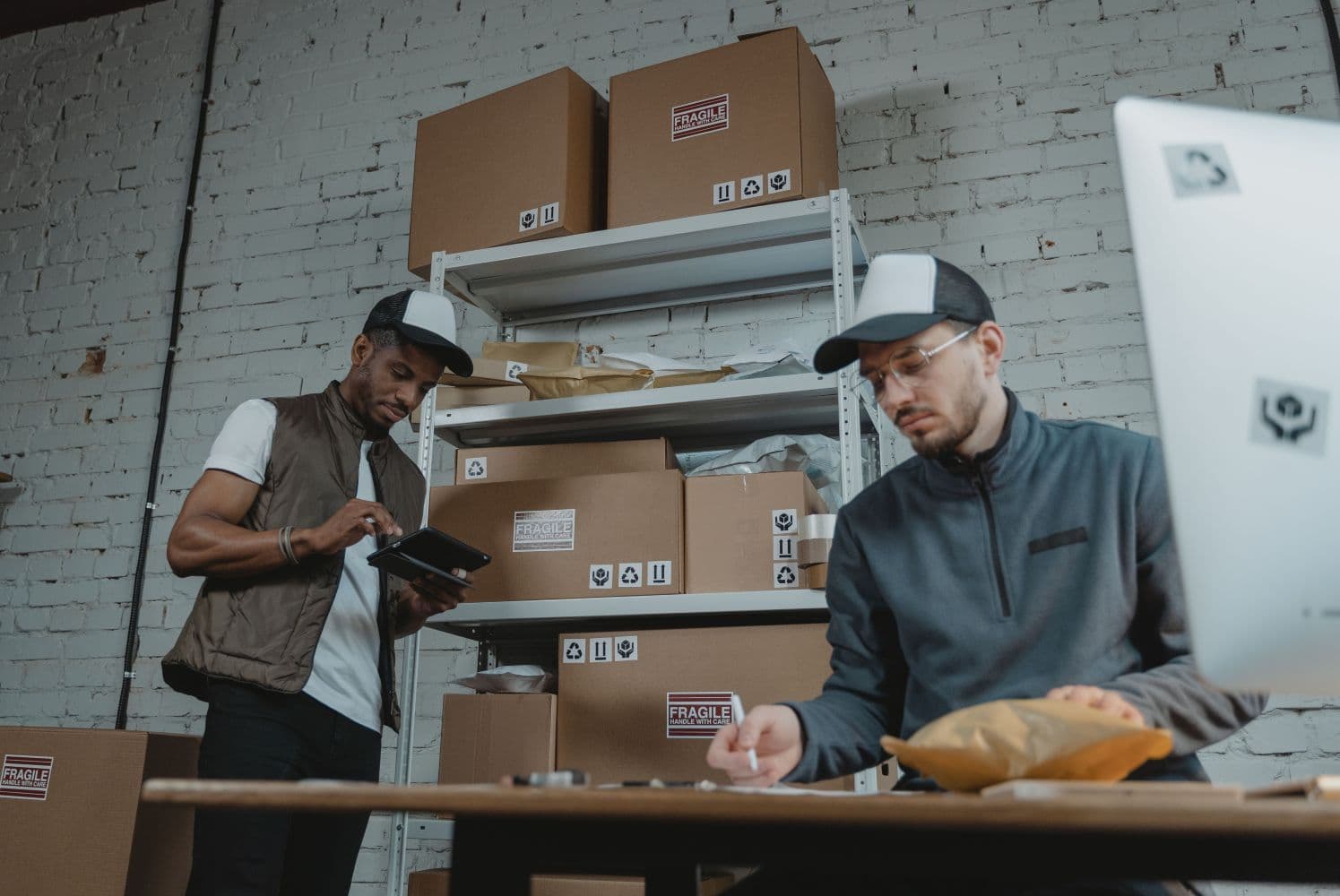
What Is Pick and Pack Fulfillment? A Guide for E-Commerce Brands
What Is Pick and Pack Fulfillment?
Pick and pack fulfillment is the process of selecting products from warehouse inventory, packing them for shipment, and preparing orders for delivery to customers.
It is one of the most important parts of the e-commerce order fulfillment process. After a customer places an order, the correct products need to be located in the warehouse, picked in the right quantities, packed appropriately, labeled, and shipped.
The basic process looks like this:
Order Received → Picking → Packing → Shipping
While the process may sound simple, the way a warehouse handles picking and packing can have a major impact on fulfillment speed, order accuracy, labor costs, and customer satisfaction.
As order volume grows, having efficient pick and pack processes becomes increasingly important.
How Does the Pick and Pack Process Work?
The exact process varies depending on the warehouse, products, and technology being used, but most pick and pack operations follow the same basic steps.
1. An Order Is Received
The process begins when a customer places an order.
For an e-commerce business, the order may come through a platform such as Shopify, Amazon, WooCommerce, or another marketplace or sales channel.
Order information is sent to the warehouse, typically through a warehouse management system (WMS) or another connected fulfillment platform.
The warehouse now knows which products need to be picked, how many units are required, and where the order needs to be shipped.
2. Products Are Picked
Next, the correct products are retrieved from their storage locations.
The picker may receive instructions through a handheld device, scanner, pick list, or warehouse management system that directs them to the appropriate location.
The goal is to retrieve the correct SKUs and quantities as efficiently and accurately as possible.
3. The Order Is Packed
Once the products have been picked, they are brought to a packing station.
The items are verified and placed into the appropriate box, mailer, or other packaging. Depending on the brand, the packing process may also include inserts, branded packaging, protective materials, or other special instructions.
The goal is to protect the products during shipping while avoiding unnecessary packaging and shipping costs.
4. The Shipping Label Is Created
Once the order is packed, the appropriate shipping label is generated.
The shipping method may depend on the customer's selection, carrier rates, delivery requirements, package dimensions, destination, or other shipping rules.
Tracking information is then associated with the order.
5. The Order Ships
The completed package is sorted for the appropriate carrier and leaves the warehouse.
Tracking information can then be sent back to the e-commerce platform and provided to the customer.
What Are the Different Pick and Pack Methods?
Warehouses don't always pick orders one at a time. Different picking methods can be used depending on order volume, SKU count, warehouse layout, and the types of products being fulfilled.
Piece Picking
Piece picking, sometimes called single-order picking, is one of the simplest methods.
A warehouse employee picks all of the products for one order before moving on to the next order.
This can work well for lower order volumes or orders with several different products, but it may become inefficient at scale if employees repeatedly travel through the same areas of the warehouse.
Batch Picking
Batch picking allows multiple orders to be picked together.
Instead of traveling to a storage location separately for every order, a picker can retrieve products for several orders during the same trip through the warehouse.
For example, if 20 orders all contain the same product, the necessary units can be picked together and then separated into the individual customer orders.
Batch picking can reduce unnecessary travel time and improve warehouse efficiency, particularly for businesses with a high volume of similar orders.
Zone Picking
With zone picking, the warehouse is divided into different areas or zones.
Employees are assigned to specific zones and pick the products stored within their area. If an order contains products from multiple zones, it may move through several areas before packing.
This approach can be useful in larger warehouses where having every picker travel throughout the entire facility would be inefficient.
Wave Picking
Wave picking groups orders together and releases them for picking at specific times.
Orders may be grouped based on carrier pickup times, shipping methods, order priority, product type, or other operational factors.
This can help warehouses coordinate picking activity with packing and shipping schedules.
Many fulfillment operations use a combination of picking methods rather than relying on a single approach for every order.
Why Does Pick and Pack Efficiency Matter?
Picking and packing are directly connected to how quickly and accurately customer orders leave the warehouse.
Faster Fulfillment
Efficient picking methods and warehouse organization reduce the amount of time employees spend locating products.
That can help orders move through the fulfillment process faster and make it easier to meet shipping cutoff times.
Better Order Accuracy
Picking the wrong SKU or quantity creates problems for both the business and the customer.
Processes such as barcode scanning, product verification, and quality-control checks can help reduce errors before an order leaves the warehouse.
Lower Fulfillment Costs
Warehouse labor is a major part of fulfillment costs.
If employees spend unnecessary time walking between storage locations, searching for inventory, or correcting mistakes, the cost of fulfilling each order can increase.
Efficient warehouse layouts and picking processes help reduce unnecessary labor.
Better Customer Experience
Customers may never see what happens inside the warehouse, but they experience the results.
A fast, accurate pick and pack operation helps ensure customers receive the correct products on time and in good condition.
What Causes Pick and Pack Errors?
Even small fulfillment mistakes can become expensive when they happen repeatedly.
Common causes of pick and pack errors include:
- Similar-looking products or SKUs
- Incorrect inventory records
- Poor warehouse organization
- Inefficient storage locations
- Manual data entry
- Unclear packing instructions
- High order volumes without scalable processes
- Missing quality-control procedures
Technology can help reduce some of these risks.
Warehouse management systems, barcode scanning, inventory tracking, and standardized workflows can provide additional checks throughout the fulfillment process.
Warehouse layout matters too. Frequently ordered products can often be placed in easily accessible locations, while clear product labeling and organized storage make it easier for employees to locate the correct inventory.
What Is the Difference Between Picking and Packing?
Picking and packing are two separate steps within the fulfillment process.
Picking is the process of locating and retrieving the correct products and quantities from warehouse inventory.
Packing is the process of preparing those products for shipment, including verifying the order, selecting packaging, protecting the products, and applying the shipping label.
Both steps need to work together for an order to move accurately and efficiently through the warehouse.
What Is Pick and Pack Fulfillment With a 3PL?
When a business outsources fulfillment to a third-party logistics provider, the 3PL handles the pick and pack process on the company's behalf.
The business sends inventory to the 3PL's warehouse. When a customer places an order, the order is transmitted to the 3PL, where warehouse employees pick the products, pack the order, create the shipping label, and prepare it for carrier pickup.
Depending on the provider, a 3PL may also handle:
- Inventory storage and management
- Receiving
- Kitting and assembly
- Custom packaging
- Retail fulfillment
- Returns
- Shipping and carrier coordination
This allows businesses to outsource much of the physical fulfillment operation rather than managing warehouse space, technology, equipment, and fulfillment labor internally.
In-House Pick and Pack vs. Outsourcing to a 3PL
Some businesses handle picking and packing internally, while others outsource the process to a 3PL.
In-house fulfillment can make sense when order volume is manageable and the business has enough space, labor, technology, and resources to operate efficiently.
As a business grows, those requirements can change.
Higher order volumes may require additional warehouse space, more employees, better inventory systems, equipment, and more sophisticated fulfillment processes.
A 3PL already has much of that infrastructure in place, allowing businesses to use an established fulfillment operation instead of building or expanding one themselves.
The right approach depends on the size, complexity, and needs of the business.
When Should You Outsource Pick and Pack Fulfillment?
There isn't a specific order volume at which every business should outsource fulfillment.
However, several signs may indicate that an in-house pick and pack operation is becoming difficult to manage:
- Order volume is increasing
- Your team spends too much time fulfilling orders
- You are running out of storage or warehouse space
- Shipping errors are becoming more common
- Seasonal volume is difficult to manage
- Hiring warehouse labor is becoming challenging
- You are adding new sales channels
- Fulfillment is taking time away from other areas of the business
Outsourcing doesn't automatically make sense for every company, but it can provide additional infrastructure and scalability when fulfillment becomes a growing operational burden.
What Should You Look for in a Pick and Pack Provider?
The right fulfillment partner needs to do more than simply put products into boxes.
When evaluating pick and pack services, consider factors such as:
- Order accuracy
- Shipping cutoff times
- Warehouse technology
- E-commerce and marketplace integrations
- Inventory visibility
- Experience handling your product type
- Ability to scale with order volume
- Packaging and customization capabilities
- Returns management
- Customer support
- Pricing structure
It is also important to understand how the provider measures performance and communicates when problems occur.
The goal is to find a fulfillment partner whose capabilities match the needs of your operation rather than choosing solely based on the lowest quoted price.
Frequently Asked Questions About Pick and Pack Fulfillment
What does pick and pack mean?
Pick and pack refers to the process of retrieving products from warehouse inventory and packing them for shipment. Picking involves locating the correct products, while packing involves preparing those products to be shipped to the customer.
How does pick and pack fulfillment work?
After an order is received, warehouse employees retrieve the correct products, verify the order, pack the items, create a shipping label, and prepare the package for carrier pickup.
What is the difference between picking and packing?
Picking involves retrieving products from their warehouse storage locations. Packing happens after picking and involves preparing those products for shipment.
How much do pick and pack services cost?
Pick and pack pricing varies depending on the fulfillment provider, order volume, number of items per order, product characteristics, packaging requirements, and additional services. Some 3PLs charge per order, per item, or use a combination of fulfillment fees.
Can a 3PL handle custom packaging or kitting?
Many 3PLs offer additional services such as custom packaging, kitting, assembly, inserts, bundles, and other value-added services. Capabilities vary by provider, so businesses with specialized requirements should discuss those needs before choosing a fulfillment partner.
The Bottom Line
Pick and pack fulfillment is a critical part of getting products from warehouse inventory to customers.
Although the basic process is straightforward, efficient picking and packing requires the right combination of warehouse organization, technology, labor, and processes.
As order volume grows, small inefficiencies can become much larger problems. Improving the pick and pack process can help businesses increase order accuracy, reduce unnecessary labor, ship orders faster, and provide a more consistent customer experience.
For businesses that don't want to build and manage that infrastructure themselves, outsourcing pick and pack fulfillment to a 3PL can provide a more scalable option.
Looking for Pick and Pack Fulfillment Services?
Fast Fulfillment provides scalable pick and pack fulfillment for growing e-commerce and retail brands.
From inventory storage and order processing to picking, packing, shipping, and additional value-added services, our team helps businesses manage fulfillment without having to build the entire operation in-house.
Contact Fast Fulfillment to discuss your fulfillment needs and see whether we're the right fit for your business.