
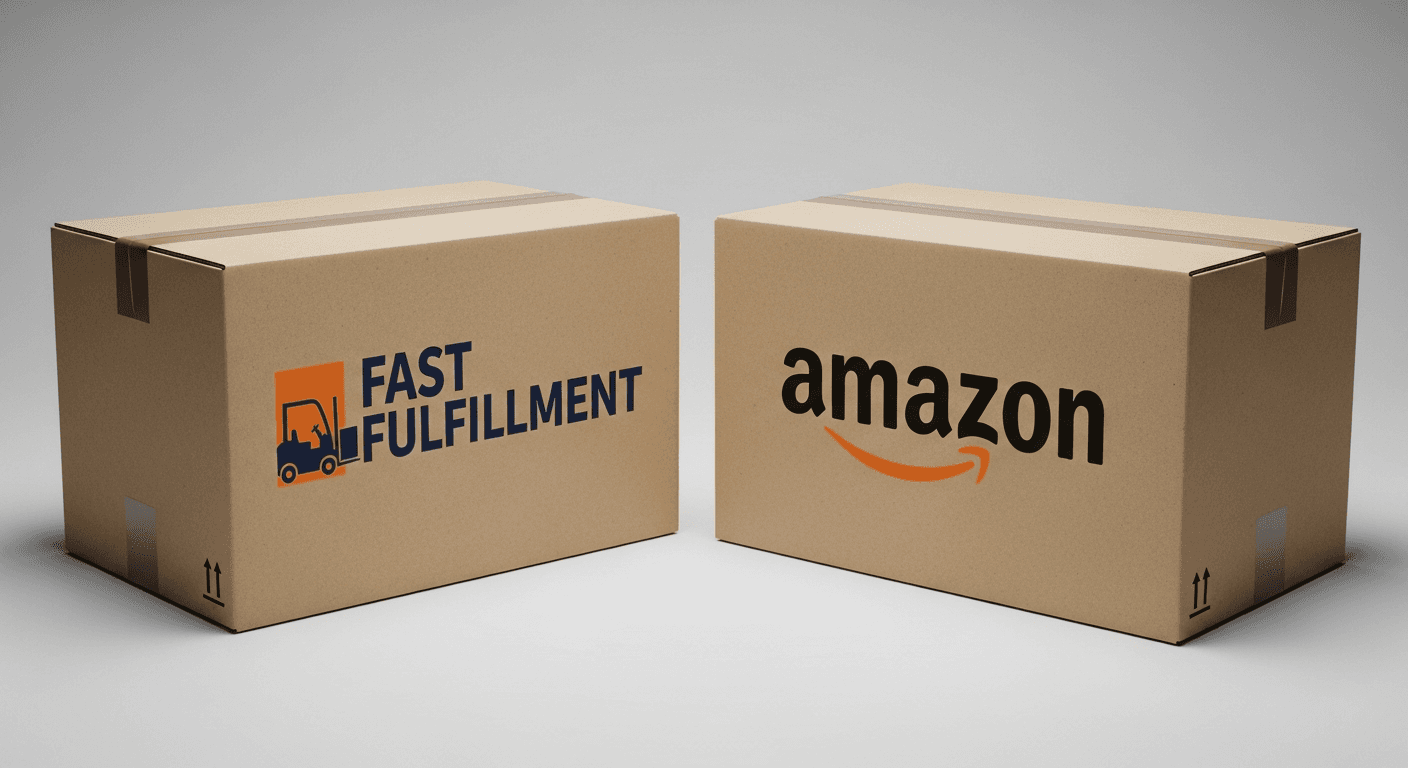
Amazon Supply Chain Services vs Traditional 3PL: What Brands Need to Know
Amazon has recently expanded its logistics capabilities beyond fulfillment, offering what it now calls Supply Chain Services. For brands evaluating their options, understanding how this compares to a traditional 3PL is increasingly important.
What Amazon Supply Chain Services Actually Are
Amazon Supply Chain Services allow businesses to use Amazon's logistics network from end to end.
Instead of coordinating multiple partners, brands can rely on Amazon to handle:
- Inbound freight from manufacturers
- Inventory storage across its warehouse network
- Distribution of inventory across regions
- Order fulfillment from multiple sales channels
- Final mile delivery
This applies whether a brand sells on Amazon, its own website, or both. In simple terms, Amazon is turning its internal logistics operation into a service that other businesses can use.
How Amazon's Model Works in Practice
Consider a growing e-commerce brand. With Amazon's model, the process is straightforward. The brand manufactures its product and sends inventory into Amazon's network. From there, Amazon takes over.
Inventory is stored across Amazon's facilities based on where demand is expected. When orders come in, whether from Amazon or another sales channel, Amazon handles picking, packing, and shipping.
The brand is removed from most day-to-day logistics decisions. Operations become simpler, with fewer vendors to manage.
How a Traditional 3PL Compares
A traditional 3PL offers a different approach. While a 3PL still handles storage and order fulfillment, the relationship is more collaborative. Brands typically have more visibility into operations and more influence over how things are done.
That can include:
- Choosing where inventory is stored
- Defining packaging and presentation
- Building custom workflows for different order types
- Adjusting processes as the business evolves
Instead of fitting into a single system, the 3PL adapts to the needs of the brand.
Key Differences Between Amazon and 3PLs
At a high level, the difference comes down to structure. Amazon's model is built on standardization. That consistency allows it to operate at massive scale and deliver fast, reliable results.
Traditional 3PLs are built for flexibility. They can accommodate variations in products, processes, and customer expectations.
This creates a clear tradeoff:
- Amazon prioritizes efficiency and simplicity
- 3PLs prioritize control and adaptability
Neither approach is inherently better. The right fit depends on how a business operates and what it values.
When Amazon Makes Sense
Amazon's supply chain model can be a strong fit for certain types of brands. It tends to work well for businesses that:
- Ship high volumes of product
- Have straightforward SKUs and packaging
- Prioritize speed and nationwide coverage
- Want to reduce operational complexity
For these companies, the ability to consolidate logistics under one system can save time and streamline execution.
When a 3PL Is a Better Fit
A traditional 3PL may be a better option for brands with more complex or specific requirements. This often includes businesses that:
- Use custom packaging, inserts, or branded experiences
- Require kitting, bundling, or special handling
- Manage both B2B and direct-to-consumer fulfillment
- Need flexibility as their operations grow or change
- Value direct communication and ongoing support
In these cases, the ability to tailor operations can be just as important as speed. Services like kitting and assembly, FBA prep, and reverse logistics are areas where a dedicated 3PL partner consistently outperforms a standardized network.
Why Many Brands Use Both
For many companies, this is not an either-or decision. A hybrid approach is becoming more common, where brands use both Amazon and a 3PL to support different parts of their operation.
For example:
- Amazon may be used for fast, nationwide fulfillment of standard SKUs
- A 3PL may handle more complex orders, branding requirements, or specialized workflows
This allows brands to balance efficiency with control across their full operation.
Final Thoughts
Amazon's expansion into full supply chain services is a natural next step given the scale of its logistics network. For brands, it introduces a new way to simplify operations and reduce the number of partners involved.
At the same time, it highlights the continued role of 3PLs in providing flexibility, customization, and a more hands-on partnership. The decision is less about choosing one over the other, and more about determining which model aligns with how your business operates.
For many brands, the answer may include a combination of both.
Looking for a Fulfillment Partner That Can Adapt to Your Business?
Contact Fast Fulfillment to learn how we support flexible, scalable 3PL solutions, from same-day order processing and kitting and assembly to FBA prep and e-commerce fulfillment.
Get a free fulfillment analysis→Fast Fulfillment Team
Kansas City Warehousing Experts
Related Resources
FBA Prep Services
Amazon-compliant prep, labeling, and shipping from our Kansas City facility.
E-Commerce Fulfillment
Same-day order processing with 50+ platform integrations and 99.7% accuracy.
Kitting and Assembly
Custom bundling, inserts, and branded packaging that Amazon's network cannot replicate.
Get a Free Quote
Talk to our team about your fulfillment needs and get a custom rate analysis.